

The Economics of War
Just for reference: One shot from a Javelin costs $100,000.
Firing once from a Chinese drone of the MAM-L type costs $60-100,000, while the drone itself costs ten million.
Firing once from the Stugna anti-tank gun costs $18,400.
Firing from the VOG-25 grenade launcher does not cost anything since there is a vast number of grenades stowed away in Ukrainian military depots since the 1960s.
Each of these missiles kills enemy tanks. If you, like me, find this idea exciting, please read on, it won’t take more than five minutes.
Serhiy Hnidko, the founder of the Eyes of the Army, talks about his vision of the current war from the economic point of view 👇🏼
I am probably late with this post. After all, the war has been going on for a while, but that is what everybody is expecting by now. I enlisted in the very first days and have seen quite a bit: It started with a twelve hour wait in front of the army recruiting office. But I have also witnessed exciting achievements, of which I will show you some video footage. What I would like to convey here is an economic view on the war, from the viewpoint of a civilian recruiter. I am mainly busy looking for Open Source Intelligence (OSINT) specialists, fact-checkers, cybersecurity people, drone pilots and artillery observers. I have become interested in recent events concerning Ukraine, the war, the Maydan protests etc., which I used to focus on staffing. When I had to deal with volunteers I always let them come up with their own observations, make their own proposals. After all, I could not see and know everything. Recent events are no exception to this rule, but this is not what I would like to talk about.
These days, we were busy fundraising and we have had quite a bit of success raising money for Ukrainian soldiers. We collected more than 300,000 hryvnia, which we used to good purpose:
– we bought a Phantom 4 Pro multi-rotor, which has already been put to service with the special forces (spetsnaz) in the North on the right bank of the Dnipro river;
– a second Phantom 4 was given to the “Mirotvorets” Battalion;
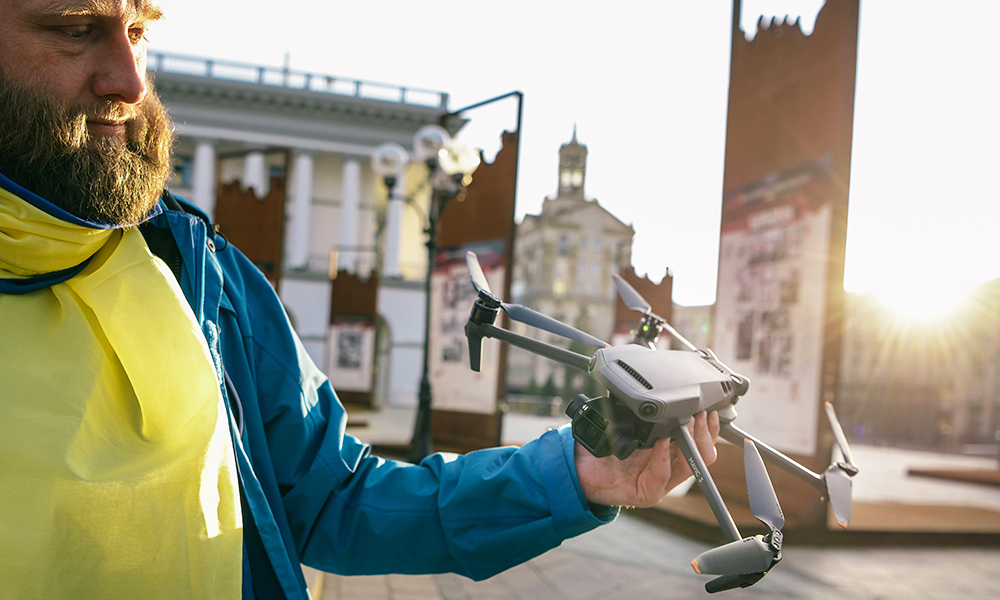
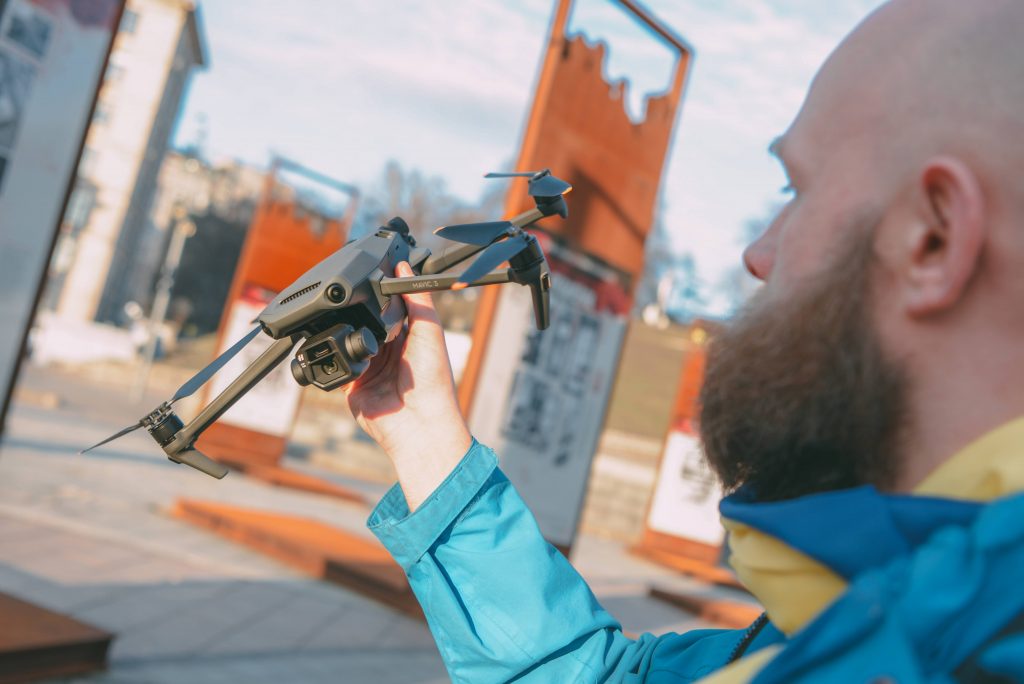
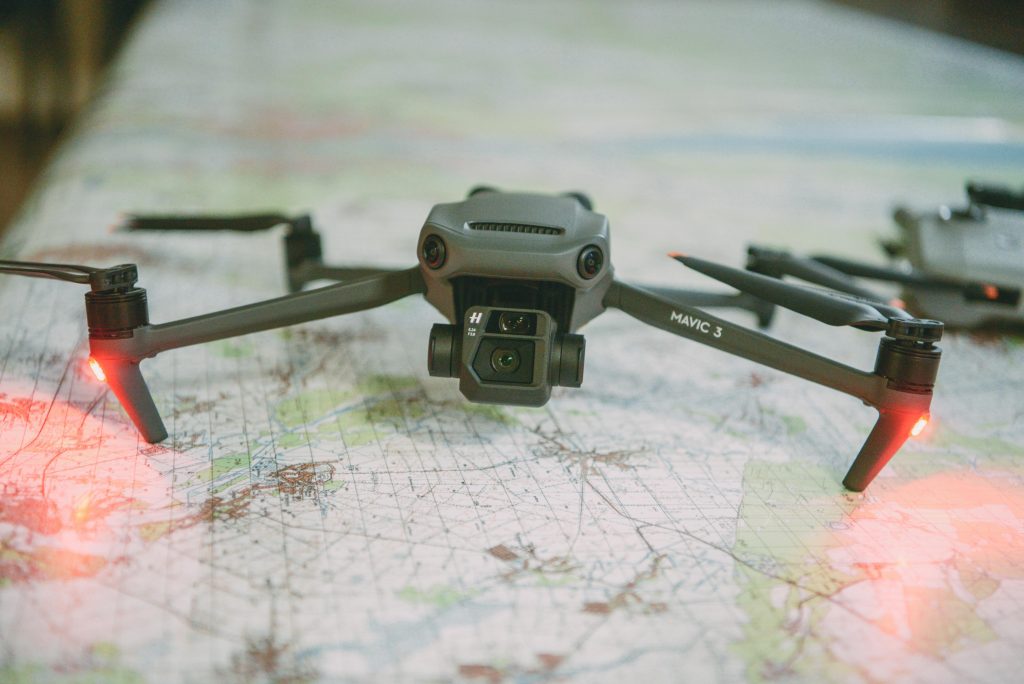
– a third Phantom 3 Advanced was sent to Chernihiv, when the road there could still be used without difficulty: – three more DJI Mavic FlyMore Combos have come from Czechia (these have an acceptable flying range and come with spare parts and a set of different cameras)
I would like to explain why we made the decision to use the money this way.
Firstly, in a modern war, tanks are used to destroy the enemy manpower. Artillery and aircraft are used to destroy tanks. This is how we are fighting now, that is what is going on on all fronts. The enemy is suffering severe casualties through heavy artillery and explosive missiles. Most importantly, both sides have an abundance of ammunitions and weapons. Luckily, in the beginning of the war our opponent acted like a herd of sheep, abandoning miles long columns of military hardware while still reckoning to win in a blitz. My impression now is that while they are advancing again, the sheep learned their lesson and do not assemble in large crowds anymore. Thus, they are making our work more difficult, or more accurately, they give us more to do. Their losses are predominantly due to our artillery and air force. For the rest of the armed forces I leave ten percent, actually it’s less than that. The military experts may prove me wrong.
Secondly, fact of the day: Ever since World War II, i.e. after 1945, artillery does not work anymore without its eyes – the artillery observers are among those whom I recruit. The task of the artillery observer is to have a sight of the prospective target area, to determine the coordinates of enemy weapons and targets, and transmit their observations to the artillery commander: 200 yards more to the north, 400 yards closer. On a regular basis, our battery will destroy an enemy object worth millions of dollars with the next salvo, thus giving a boost to the market value of scrapyards while sapping the morale of the opponent.
One more important detail: The artillery can do without an observer but its effectiveness will be at only twenty percent compared to having the “eyes of the artillery” in place.
So there are plenty of ammunition stocks and plenty of food supplies, but the enemy tanks continue to dig in in our fields, which are not being prepared for sowing.
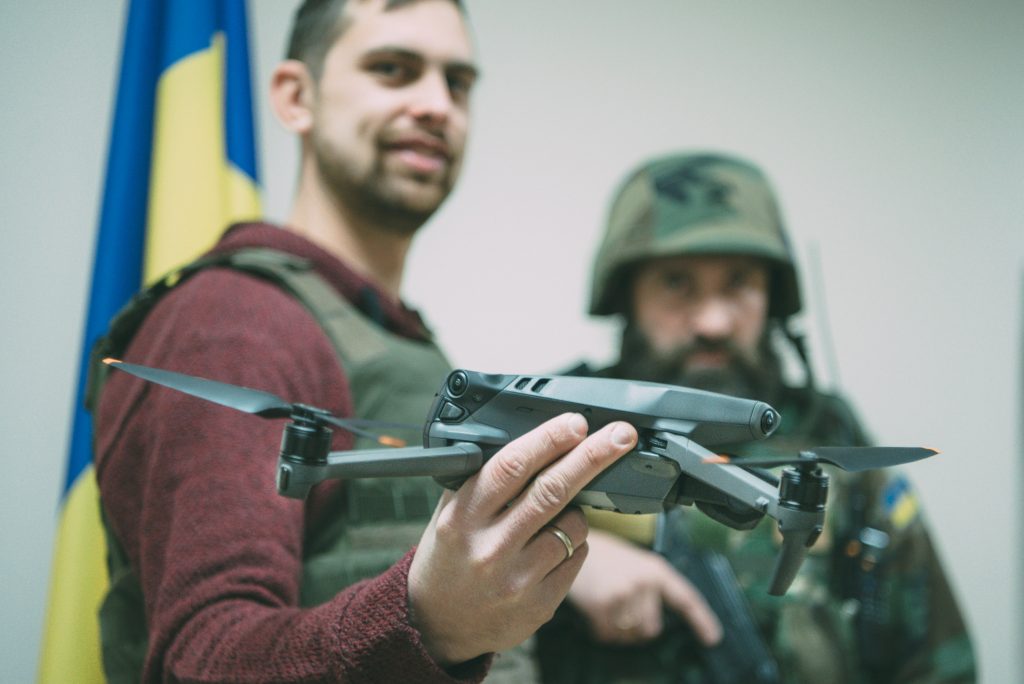
The situation is paradoxical in that the list of government purchases contains everything needed by the Armed Forces of Ukraine, including tablets and protected personal computers, but no equipment for artillery observation. All the existing Mavic and Phantom drones have been purchased by volunteers and paid for from citizens’ army support funds. Indeed, there are professional UAVs, e.g. the “Leleka” (“Swan”), which have an excellent range and functionality. But how much are these and what tasks do they fulfill? Alas, they are not equipped to drop bombs on the enemy’s heads. For obvious reasons, most of the combat battalions already lost many of their drones. To add insult to injury, new UAVs are being produced individually only; production is being continued under war conditions, no longer one hundred items per day as the usual DJI drones. Furthermore, they cannot be purchased now even at triple price, because they are simply not available anymore.
Aerial reconnaissance, grouped according to type of UAVs, now works as follows: Winged UAVs, such as the “Leleka” and similar types, have a range of 30 to 60 km and are used for topographical reconnaissance. Run-of-the-mill multi-rotors such as the Phantom and Mavic types are used for artillery observation during daytime. Agrarian drones with night sights are used during nighttime to drop missiles on tank lorries.
For the time being, these simple tactics work, and we are prevailing. Therefore, I suggest not to change anything, and go on systematically destroying the enemy armored vehicles exactly as we have been doing so far. Alas, those multi-copters are not exactly cheap, and nobody seems to be willing to simply donate them to us. So they cost a lot, and moreover they are expendable items. Of course, the damage they do to the opponent is even much more significant. Fortunately, we were able to organize purchase and distribution to run smoothly – I won’t give away which was more difficult – so we can proudly call them efficient. In the morning, we purchase a multi-copter in Czechia or Poland, by 4 p.m. it will be transferred over the border via a green corridor, and it will be at our disposal within 48 hours. Two more hours and it will reach the front lines, ten hours after the first star can be painted on the fuselage for the first battle kill.
It goes without saying that body armor and even a McCoffee at the checkpoint are important items: They help to make the soldiers endure and may also save lives. Their only drawback – they don’t diminish the number of enemies on the territory of our sovereign Ukraine.
I have a fairly simple suggestion for you.
Let’s assume in its short lifespan a multi-copter worth 1000 US dollars helps to take out a single armored personnel carrier, a tank, or a tank lorry. In my opinion, this is still very efficient, and it makes sense to purchase a couple of these items. Estimating cautiously, our cost advantage will be 1 to 250.
If you like this idea, I suggest you join my fundraising campaign and centrally purchase these UAVs in numbers sufficient to fulfill the current combat assignments.
I promise not a single drone will remain in the depot as long as there are combat units in need of them. And we will win! Just give us the wherewithal to accomplish that.